“Experts in literacy and child development have discovered that if children know eight nursery rhymes by heart by the time they’re four years old, they’re usually among the best readers by the time they’re eight.”
Mem Fox
Reading Magic: How your child can learn to read before school (and other read-aloud miracles)
About Me
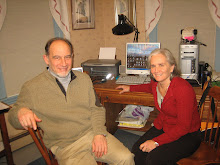
- Lea Donovan Watson
- Listening and Spoken Language Specialist, Certified Auditory-Verbal Therapist, Speech-Language Pathologist, International consultant for LSLS training and children with hearing loss, husband-wife AVCC team, mother of three amazing individuals.
Friday, June 24, 2011

What does it mean to GUIDE and coach parents?
Guidance offered for:
Understanding
Informing
Directing
Evaluating for appropriate expectations
Parent guidance is a foundation from which the family develops their own way.
GUIDE:
Parent, you are your child's Primary teacher. AVTherapist is only a coach.
parents, please be coachable....
Encourage your full family's involvement -grandparents
Read and embrace the 10 Principles of Auditory-Verbal Practice
Parents, you can adjust to your baby’s sensitivities
UNDERSTAND:
Let's talk and listen to each other. Let's share out thoughts about parenting, deafness, hearing....
Other parents can help:
Talking Twenty Four Seven
by Kerry Dowling
www.talkingtwentyfourseven.blogspot.com
"Welcome to Holland"
by Emily Perl Kingsley
Who Moved My Cheese?
By Spencer Johnson
The Power of the Powerless
by Christopher deVinck
If A Tree Falls
by Jennifer Rosner
Perfectly Imperfect
by Lee Woodruff
"Narrate your own story"
by YOU
Choices in Deafness Edited by Sue Schwartz
Auditory-Verbal Practice Edited by Warren Estabrooks
INFORM
We already know a lot about:
Aspects of deafness and hearing loss
Aspects of development - speech, language, listening, cognition, communication
Aspects of parenting - Love and Logic Pearls of Wisdom
We don't know everytihng, but we can help each other learn when we share information.
DIRECT
We can direct you in the:
Auditory-Verbal Therapy process
We can direct you to other sources of information:
Alexander Graham Bell Association for the Deaf and Hard of Hearing, Inc
A G Bell State chapters
parent groups
EXPECTATIONS:
We hear with our brains! Auditory-verbal info to the brain first!
Parents are asked to do the Ling Sounds every day and report how their child responds
Create a listening attitude
BE Auditory all day long
3 Es – Expect them to hear. make it as Easy as possible. Enhance listening skills in all they do.
Read 10 Books a day.
Keep an Experience Book!
Understanding
Informing
Directing
Evaluating for appropriate expectations
Parent guidance is a foundation from which the family develops their own way.
GUIDE:
Parent, you are your child's Primary teacher. AVTherapist is only a coach.
parents, please be coachable....
Encourage your full family's involvement -grandparents
Read and embrace the 10 Principles of Auditory-Verbal Practice
Parents, you can adjust to your baby’s sensitivities
UNDERSTAND:
Let's talk and listen to each other. Let's share out thoughts about parenting, deafness, hearing....
Other parents can help:
Talking Twenty Four Seven
by Kerry Dowling
www.talkingtwentyfourseven.blogspot.com
"Welcome to Holland"
by Emily Perl Kingsley
Who Moved My Cheese?
By Spencer Johnson
The Power of the Powerless
by Christopher deVinck
If A Tree Falls
by Jennifer Rosner
Perfectly Imperfect
by Lee Woodruff
"Narrate your own story"
by YOU
Choices in Deafness Edited by Sue Schwartz
Auditory-Verbal Practice Edited by Warren Estabrooks
INFORM
We already know a lot about:
Aspects of deafness and hearing loss
Aspects of development - speech, language, listening, cognition, communication
Aspects of parenting - Love and Logic Pearls of Wisdom
We don't know everytihng, but we can help each other learn when we share information.
DIRECT
We can direct you in the:
Auditory-Verbal Therapy process
We can direct you to other sources of information:
Alexander Graham Bell Association for the Deaf and Hard of Hearing, Inc
A G Bell State chapters
parent groups
EXPECTATIONS:
We hear with our brains! Auditory-verbal info to the brain first!
Parents are asked to do the Ling Sounds every day and report how their child responds
Create a listening attitude
BE Auditory all day long
3 Es – Expect them to hear. make it as Easy as possible. Enhance listening skills in all they do.
Read 10 Books a day.
Keep an Experience Book!
Happiness
"Many persons have a wrong idea of what constitutes true happiness. It is not attained through self gratification, but through fidelity to a worthy purpose.” Helen Keller
A worthy purpoes?
Coaching caregivers how to help their children learn to listen and speak well!
Learning to listen
Listening to learn
Listening as a way of life
"Parents unconsciously know how to talk to a child so the child will learn language."
Linguist, Roger Brown 1977
A worthy purpoes?
Coaching caregivers how to help their children learn to listen and speak well!
Learning to listen
Listening to learn
Listening as a way of life
"Parents unconsciously know how to talk to a child so the child will learn language."
Linguist, Roger Brown 1977
How to Grow Your Baby's Brain the Auditory-Verbal Way
How to Grow Your Baby’s/Child’s Brain the Auditory-Verbal Way
From “Children with Hearing Loss: Developing Listening and Talking”
By Elizabeth Cole and Carol Flexer 2007
Above all, love, play and have fun with your child!
1. The quieter the room and the closer you are to your child, the better you will be heard.The child may have difficulty over hearing conversations and hearing from a distance.You need to be close to your child when you speak.
2. Your child must wear his or her hearing aid or cochlear implant during all waking
hours (except bathing or swimming, of course),every day of the week.The brain needs
constant,detailed auditory input in order to develop. Knowingly depriving your child ofthis access is a form of neglect. The technology is your access to the brain and your child’s access to full knowledge of the world around him or her.
3. Check your child’s technology regularly. Equipment malfunctions, often. Become
proficient at troubleshooting.
4. Use an FM system at home to facilitate distance hearing and incidental learning. An FM system can be used during reading too, to improve the signal-to-noise ratio and to facilitate the development of auditory self-monitoring. Place the FM microphone on the child so that he/she can clearly hear their own speech, thereby facilitating the development of the “auditory feedback loop.”
5. Focus on listening, not just seeing. Call attention to sounds and to conversations in the room. Point to your ear and smile, and talk about the sounds you just heard and what they mean. Use listening words such as “You heard that,” “You were listening,” and “I heard you.”
6. Maintain a joint focus of attention when reading and when engaged in activities. That is, the child looks at the book or at the activity while listening to you.
7. Speak in sentences, not single words, with clear speech using lots of melody.
8. Read aloud to your child, daily. Even infants can be read to, as can older children. Try to read at least 10 books to your baby or child each day. We should be reading chapter books by pre-school.
9. Sing and read nursery rhymes to your baby or young child every day. Fill his/her days with all kinds of music and songs to promote interhemispheric transfer.
10. Name objects in the environment as you encounter them during daily routines.
Constantly be mindful of expanding vocabulary.
11. Talk about and describe how things look, sound and feel.
12. Talk about where objects are located. You will use many prepositions such as in, on, under, behind, beside, next to and between. Prepositions are the bridge between and abstract thinking.
13. Compare how objects or actions are similar and different in size, shape, quantity, smell,color, and texture.
14. Describe sequences. Talk about the steps involved in activities as you are doing the activity. Sequencing is necessary for organization and for the successful completion of any task.
15. Tell familiar stories or stories about events from your day or from your past. Keep narratives simpler for younger children, and increase complexity as your child grows.
IF YOU FOLLOW THESE STEPS, YOU WILL PROVIDE A VERY PRODUCTIVE
AUDITORY VERBAL ENVIRONMENT FOR YOUR BABY/CHILD
Lea Donovan Watson, M.S., CCC/SLP, LSLS Cert. AVT
Licensed Speech-Language Pathologist
Listening and Spoken Language Specialist Certified Auditory-Verbal Therapist
From “Children with Hearing Loss: Developing Listening and Talking”
By Elizabeth Cole and Carol Flexer 2007
Above all, love, play and have fun with your child!
1. The quieter the room and the closer you are to your child, the better you will be heard.The child may have difficulty over hearing conversations and hearing from a distance.You need to be close to your child when you speak.
2. Your child must wear his or her hearing aid or cochlear implant during all waking
hours (except bathing or swimming, of course),every day of the week.The brain needs
constant,detailed auditory input in order to develop. Knowingly depriving your child ofthis access is a form of neglect. The technology is your access to the brain and your child’s access to full knowledge of the world around him or her.
3. Check your child’s technology regularly. Equipment malfunctions, often. Become
proficient at troubleshooting.
4. Use an FM system at home to facilitate distance hearing and incidental learning. An FM system can be used during reading too, to improve the signal-to-noise ratio and to facilitate the development of auditory self-monitoring. Place the FM microphone on the child so that he/she can clearly hear their own speech, thereby facilitating the development of the “auditory feedback loop.”
5. Focus on listening, not just seeing. Call attention to sounds and to conversations in the room. Point to your ear and smile, and talk about the sounds you just heard and what they mean. Use listening words such as “You heard that,” “You were listening,” and “I heard you.”
6. Maintain a joint focus of attention when reading and when engaged in activities. That is, the child looks at the book or at the activity while listening to you.
7. Speak in sentences, not single words, with clear speech using lots of melody.
8. Read aloud to your child, daily. Even infants can be read to, as can older children. Try to read at least 10 books to your baby or child each day. We should be reading chapter books by pre-school.
9. Sing and read nursery rhymes to your baby or young child every day. Fill his/her days with all kinds of music and songs to promote interhemispheric transfer.
10. Name objects in the environment as you encounter them during daily routines.
Constantly be mindful of expanding vocabulary.
11. Talk about and describe how things look, sound and feel.
12. Talk about where objects are located. You will use many prepositions such as in, on, under, behind, beside, next to and between. Prepositions are the bridge between and abstract thinking.
13. Compare how objects or actions are similar and different in size, shape, quantity, smell,color, and texture.
14. Describe sequences. Talk about the steps involved in activities as you are doing the activity. Sequencing is necessary for organization and for the successful completion of any task.
15. Tell familiar stories or stories about events from your day or from your past. Keep narratives simpler for younger children, and increase complexity as your child grows.
IF YOU FOLLOW THESE STEPS, YOU WILL PROVIDE A VERY PRODUCTIVE
AUDITORY VERBAL ENVIRONMENT FOR YOUR BABY/CHILD
Lea Donovan Watson, M.S., CCC/SLP, LSLS Cert. AVT
Licensed Speech-Language Pathologist
Listening and Spoken Language Specialist Certified Auditory-Verbal Therapist
13 Tips for Reading
Thirteen Tips for Reading
By Kerry Dowling
***This article was published in Volta Voices; Vol. 11, No.2 March/April 2004.
Books have always been important to me. When I discovered I was pregnant, I immediately began buying books for our child, mostly favorites from my own childhood. I sat in the room destined to become the nursery and read out loud from these new books. A book for the baby was even packed in the hospital bag. We were ready for the next reader!
It was a huge shock to learn, on the third day after her birth through a routine newborn hearing screen, that Hadley was possibly hearing impaired. Suddenly, we began to question our very basic assumptions about Hadley’s life. One thing that helped restore a sense of normalcy for me was to sit and read to Hadley. It was comforting to do something that I had planned on doing while in the midst of researching and learning about the unexpected. As someone who had been read to throughout childhood, words have a soothing effect on me. After reading a page or two to Hadley, I could feel myself calm down and relax, to momentarily forget my anxiety over whether she would ever hear my voice. In fact, in the early months, I read to Hadley more for my own benefit than for her! I assumed that by holding Hadley close to my chest and snuggling my head next to hers, she could at least feel the vibrations of my voice and have a sense of security in being held. As I read some of my favorite children’s books to Hadley, I took time to point out the pictures and show her which illustrations had been my favorites. I never thought about whether it made sense to read to someone who possibly did not hear my voice, much less to read fairly sophisticated books to a newborn. I just read and read and read.
Just two, Hadley wears hearing aids, meets weekly with an auditory-verbal therapist, talks in full sentences, and makes jokes. She loves to sing, march, play—and read!
How We Encourage Reading
Model reading. Hadley knows that we have shelves of books in the house that are ours, not hers. Even though her dad isn’t as book crazy as her mom, she sees him read the newspaper and magazines. We point out readers to Hadley, at home, in the library, and when we’re out around town.
Buy books! My own philosophy is that you can’t have too many books, so we made a decision early on that while we wouldn’t spend a fortune on a ton of toys, we would invest in a wide variety of books for our children.
Create a physical space for books at home. Hadley has one main play area at home with shelves for books, but we also have small baskets of her books throughout the house, next to a rocking chair, in bedrooms, and in the car.
Go to the library. We go to the library at least once a week, where we look at the paintings in the art gallery, look for a few books for me, then settle into the children’s library to where Hadley is encouraged to pick out books on her own. We keep her library books in a special place at home, which makes it easier to explain that some books stay at home and others need to be returned.
Pick up on favorites. When Hadley asks to read a book over and over again, we immediately check out other books by the same author or illustrator.
Be creative. We make “books” out of songs Hadley enjoys, either by drawing (we are not artists!), finding pictures that go along with the lyrics, or downloading clipart from the computer. Hadley likes to read through her own photo albums with captions and her Experience Book, sharing them with family and friends.
Make it fun! We act out books as much as possible (with toys, puppets, felt, whatever we have at hand), make up songs to go along with the story, and have a good time with reading. Sometimes we read the book to a stuffed animal or puppet.
Make it her activity. Hadley chooses which book to read and where to read it. If she decides halfway through that something else is more exciting, we just come back to the book later. Sometimes she just wants to read a favorite section of the book, which is fine too.
Read throughout the day. Reading is definitely an important part of Hadley’s bedtime ritual. But it’s also part of getting dressed, eating lunch, and waking up from a nap.
Vary the narrators. It’s boring to have the same person always read to you. When we have visitors, we ask Hadley to share a book with them. It’s especially fun for Hadley to have older kids read to her.
Pack a Bag. Hadley is used to selecting which items she wants to bring along when we go visiting. Books are always included, another great way to ensure that others are reading to her.
Sing it! Many books are based on well-known songs or can be set to their own tune. There are many beautifully illustrated songbooks of nursery rhymes and old favorites. Several of Hadley’s first phrases were based on lines from songs in books.
Be poetic. The cadence and rhythm of poetry is interesting to most people and is a nice break from the routine of reading a traditional book.
[1]
It is clear to me that reading and literature have been huge factors contributing to Hadley’s success to date. Books put important words into context for her, through the repetition in the language and the corresponding illustrations. Books make learning interesting and new, providing us with another avenue for bringing language into Hadley’s life. Most importantly, at two years, Hadley is already developing her own love of books.
Saturday July 2011, Sturbridge, MA,
Northeast Cochlear Implant Convention;
Certified Auditory-Verbal Therapists; Lea D. Watson and James G. Watson
Auditory Verbal Communication Center, 544 Washington Street, Gloucester. MA 01930
phone 978-282-0025 website: avcclisten.com
By Kerry Dowling
***This article was published in Volta Voices; Vol. 11, No.2 March/April 2004.
Books have always been important to me. When I discovered I was pregnant, I immediately began buying books for our child, mostly favorites from my own childhood. I sat in the room destined to become the nursery and read out loud from these new books. A book for the baby was even packed in the hospital bag. We were ready for the next reader!
It was a huge shock to learn, on the third day after her birth through a routine newborn hearing screen, that Hadley was possibly hearing impaired. Suddenly, we began to question our very basic assumptions about Hadley’s life. One thing that helped restore a sense of normalcy for me was to sit and read to Hadley. It was comforting to do something that I had planned on doing while in the midst of researching and learning about the unexpected. As someone who had been read to throughout childhood, words have a soothing effect on me. After reading a page or two to Hadley, I could feel myself calm down and relax, to momentarily forget my anxiety over whether she would ever hear my voice. In fact, in the early months, I read to Hadley more for my own benefit than for her! I assumed that by holding Hadley close to my chest and snuggling my head next to hers, she could at least feel the vibrations of my voice and have a sense of security in being held. As I read some of my favorite children’s books to Hadley, I took time to point out the pictures and show her which illustrations had been my favorites. I never thought about whether it made sense to read to someone who possibly did not hear my voice, much less to read fairly sophisticated books to a newborn. I just read and read and read.
Just two, Hadley wears hearing aids, meets weekly with an auditory-verbal therapist, talks in full sentences, and makes jokes. She loves to sing, march, play—and read!
How We Encourage Reading
Model reading. Hadley knows that we have shelves of books in the house that are ours, not hers. Even though her dad isn’t as book crazy as her mom, she sees him read the newspaper and magazines. We point out readers to Hadley, at home, in the library, and when we’re out around town.
Buy books! My own philosophy is that you can’t have too many books, so we made a decision early on that while we wouldn’t spend a fortune on a ton of toys, we would invest in a wide variety of books for our children.
Create a physical space for books at home. Hadley has one main play area at home with shelves for books, but we also have small baskets of her books throughout the house, next to a rocking chair, in bedrooms, and in the car.
Go to the library. We go to the library at least once a week, where we look at the paintings in the art gallery, look for a few books for me, then settle into the children’s library to where Hadley is encouraged to pick out books on her own. We keep her library books in a special place at home, which makes it easier to explain that some books stay at home and others need to be returned.
Pick up on favorites. When Hadley asks to read a book over and over again, we immediately check out other books by the same author or illustrator.
Be creative. We make “books” out of songs Hadley enjoys, either by drawing (we are not artists!), finding pictures that go along with the lyrics, or downloading clipart from the computer. Hadley likes to read through her own photo albums with captions and her Experience Book, sharing them with family and friends.
Make it fun! We act out books as much as possible (with toys, puppets, felt, whatever we have at hand), make up songs to go along with the story, and have a good time with reading. Sometimes we read the book to a stuffed animal or puppet.
Make it her activity. Hadley chooses which book to read and where to read it. If she decides halfway through that something else is more exciting, we just come back to the book later. Sometimes she just wants to read a favorite section of the book, which is fine too.
Read throughout the day. Reading is definitely an important part of Hadley’s bedtime ritual. But it’s also part of getting dressed, eating lunch, and waking up from a nap.
Vary the narrators. It’s boring to have the same person always read to you. When we have visitors, we ask Hadley to share a book with them. It’s especially fun for Hadley to have older kids read to her.
Pack a Bag. Hadley is used to selecting which items she wants to bring along when we go visiting. Books are always included, another great way to ensure that others are reading to her.
Sing it! Many books are based on well-known songs or can be set to their own tune. There are many beautifully illustrated songbooks of nursery rhymes and old favorites. Several of Hadley’s first phrases were based on lines from songs in books.
Be poetic. The cadence and rhythm of poetry is interesting to most people and is a nice break from the routine of reading a traditional book.
[1]
It is clear to me that reading and literature have been huge factors contributing to Hadley’s success to date. Books put important words into context for her, through the repetition in the language and the corresponding illustrations. Books make learning interesting and new, providing us with another avenue for bringing language into Hadley’s life. Most importantly, at two years, Hadley is already developing her own love of books.
Saturday July 2011, Sturbridge, MA,
Northeast Cochlear Implant Convention;
Certified Auditory-Verbal Therapists; Lea D. Watson and James G. Watson
Auditory Verbal Communication Center, 544 Washington Street, Gloucester. MA 01930
phone 978-282-0025 website: avcclisten.com
Ten Books a Day
“Ten Books A Day Keep the Doctor Away”
Lea Donovan Watson, MS, CCC Certified Auditory-Verbal Therapist
***This article was published in Volta Voices; Vol. 11, No.2 March/April 2004.
Reading to a baby is important for speech, language, and listening development. At the Auditory-Verbal Communication Center (AVCC), parents are encouraged to read with their children right away.
Parents need to be aware of outcome studies for literacy skills as well as communication when choosing the educational approach for their children who are deaf and hard of hearing. The development of auditory-verbal skills for communication and reading is more important than ever. Advances in technology offer more options for communicating, but their effective use depends on how well one can read.
Digital hearing aids and cochlear implants make hearing more accessible. Parents who choose an oral approach can expect an easier time helping their children develop spoken language than parents of the 1980s. Children who receive appropriate technology and Auditory-Verbal Therapy hear better at earlier ages, so those parents can also expect better communication and reading abilities.
Previous research found spoken language out of reach for most children with profound hearing loss and reported only a fourth grade reading level for the majority of people who are deaf and hard of hearing. Research demonstrates that technology is helping to change that. Spencer, et al (1997 ) found that children with pre-lingual, profound deafness who use cochlear implants develop higher reading levels compared with children who do not use cochlear implants. The authors speculated that use of a cochlear implant may have a positive effect on phonetic coding as it relates to the reading process. Wray, et al (1998) found that children listening with hearing aids and/or FM systems who learned spoken communication through the Auditory-Verbal Approach read at or above grade level.
Children can begin the process of learning to read as infants. To develop a foundation in literacy development, the child needs to develop an awareness that words are made up of sounds. This process starts when parents read to their babies.
The more exposure the child has to books and reading, the easier the process of learning to read will be. Audiologist, Dr. Carol Flexer, PhD states; “Children learn to read by being read to – Read! Reading is auditory! Read ten books a day!” Parents at AVCC are expected to read ten books a day starting when their children are infants. Reading books that are a little above the language level of the child is important so the child is hearing the more advanced language structure. Highlighting the prepositions helps children hear the wide range of use prepositions have. This helps them understand the more abstract levels of thinking and language.
As Dr. Flexer noted, reading is primarily an auditory skill. Dr. Frank Musiak, M.D. at Dartmouth Medical School states that the same part of the brain is active when the child is reading as when the child is listening. All the fun Auditory-Verbal Therapy games actually help develop reading as well as listening.
By the time the child starts kindergarten, a vocabulary of at least 5,000 words is expected. Reading ten books a day helps build that vocabulary so the child can understand a wider range of concepts. Imagination is triggered for the child and the adult as they read together. Interactive language experiences help expand the understanding of vocabulary.
Dr. Flexer makes it clear that reading aloud to your child is important at every stage. Parents are encouraged to read aloud with their children all through elementary school, middle school and even high school. Reading aloud books that are above the child’s instructional level is recommended.
Most people take speaking and listening for granted, but not parents of children who are deaf and hard of hearing. Parents at AVCC realize their children need auditory skills not only for talking, but also in order to have better access to reading. Electrically transmitted talk depends on literacy skills. Captioned TV programming, e-mail, and computer tools are more useful for people who can read well. Listening and talking gives children better access to reading.
Reading is critical as our society is dependent on and driven by information. Just as Alexander Graham Bell’s telephone changed the art of letter writing and the importance of face-to- face conversation when the 19th century ended, computers and ‘technological talking’ are transforming communication again. Being able to read well is critical to being included in our “information society” for the 21rst century. Parents who are aware of this read ten books a day to their children.
AVCC parents, Kerry Dowling and Dan Wilson read at least ten books a day to their daughter, Hadley. Already at age 2, the positive effect of daily reading is evident in Hadley’s advanced language abilities. I encouraged Hadley’s mother to write the following article because she makes reading alive and fun in so many ways. Reading is a priority in their life and in our weekly auditory-verbal sessions. I love to see what books Hadley packed in her bag to show me. Sharing books in this way is exciting.
References:
Locke, L.J. (1998). Where did all the gossip go? Casual conversation in the information age.ASHA The Magazine of the American Speech-Language-Hearing Association, (summer), 26-31.
Spencer, L., Tromblin, J.B., & Gantz, B.J., (1997). Reading skills in children with multichannel cochlear implant experience. The Volta Review, Volume 99 (4), 193-202.
Wray, D., Flexer, C., & Vanessa, V., (1998). Classroom performance of children who are deaf or hard of hearing and who learned spoken language through the auditory-verbal approach; an evaluation of treatment efficacy. The Volta Review, Volume 99 (2), 107-119.
Robertson, L., Literacy Learning for Children Who Are Deaf or hard of Hearing. Washington, AGBell Assoc. (2000)
“Hearing: The Essence of Literacy”; A Short Course; A.G.Bell Assoc. for the Deaf and Hard of Hearing Convention; July 2, 2002; Flexer C., Wray D., Robertson, L[1].
[1]Beginning with Babies, Saturday July 2007 Sturbridge, MA,
Northeast Cochlear Implant Convention; Listen Baby: Auditory Verbal Ideas for Infants and Toddlers,
Certified Auditory-Verbal Therapists; Lea D. Watson and James G. Watson
Auditory Verbal Communication Center, 544 Washington Street, Gloucester. MA 01930
phone 978-282-0025 website: avcclisten.com
Lea Donovan Watson, MS, CCC Certified Auditory-Verbal Therapist
***This article was published in Volta Voices; Vol. 11, No.2 March/April 2004.
Reading to a baby is important for speech, language, and listening development. At the Auditory-Verbal Communication Center (AVCC), parents are encouraged to read with their children right away.
Parents need to be aware of outcome studies for literacy skills as well as communication when choosing the educational approach for their children who are deaf and hard of hearing. The development of auditory-verbal skills for communication and reading is more important than ever. Advances in technology offer more options for communicating, but their effective use depends on how well one can read.
Digital hearing aids and cochlear implants make hearing more accessible. Parents who choose an oral approach can expect an easier time helping their children develop spoken language than parents of the 1980s. Children who receive appropriate technology and Auditory-Verbal Therapy hear better at earlier ages, so those parents can also expect better communication and reading abilities.
Previous research found spoken language out of reach for most children with profound hearing loss and reported only a fourth grade reading level for the majority of people who are deaf and hard of hearing. Research demonstrates that technology is helping to change that. Spencer, et al (1997 ) found that children with pre-lingual, profound deafness who use cochlear implants develop higher reading levels compared with children who do not use cochlear implants. The authors speculated that use of a cochlear implant may have a positive effect on phonetic coding as it relates to the reading process. Wray, et al (1998) found that children listening with hearing aids and/or FM systems who learned spoken communication through the Auditory-Verbal Approach read at or above grade level.
Children can begin the process of learning to read as infants. To develop a foundation in literacy development, the child needs to develop an awareness that words are made up of sounds. This process starts when parents read to their babies.
The more exposure the child has to books and reading, the easier the process of learning to read will be. Audiologist, Dr. Carol Flexer, PhD states; “Children learn to read by being read to – Read! Reading is auditory! Read ten books a day!” Parents at AVCC are expected to read ten books a day starting when their children are infants. Reading books that are a little above the language level of the child is important so the child is hearing the more advanced language structure. Highlighting the prepositions helps children hear the wide range of use prepositions have. This helps them understand the more abstract levels of thinking and language.
As Dr. Flexer noted, reading is primarily an auditory skill. Dr. Frank Musiak, M.D. at Dartmouth Medical School states that the same part of the brain is active when the child is reading as when the child is listening. All the fun Auditory-Verbal Therapy games actually help develop reading as well as listening.
By the time the child starts kindergarten, a vocabulary of at least 5,000 words is expected. Reading ten books a day helps build that vocabulary so the child can understand a wider range of concepts. Imagination is triggered for the child and the adult as they read together. Interactive language experiences help expand the understanding of vocabulary.
Dr. Flexer makes it clear that reading aloud to your child is important at every stage. Parents are encouraged to read aloud with their children all through elementary school, middle school and even high school. Reading aloud books that are above the child’s instructional level is recommended.
Most people take speaking and listening for granted, but not parents of children who are deaf and hard of hearing. Parents at AVCC realize their children need auditory skills not only for talking, but also in order to have better access to reading. Electrically transmitted talk depends on literacy skills. Captioned TV programming, e-mail, and computer tools are more useful for people who can read well. Listening and talking gives children better access to reading.
Reading is critical as our society is dependent on and driven by information. Just as Alexander Graham Bell’s telephone changed the art of letter writing and the importance of face-to- face conversation when the 19th century ended, computers and ‘technological talking’ are transforming communication again. Being able to read well is critical to being included in our “information society” for the 21rst century. Parents who are aware of this read ten books a day to their children.
AVCC parents, Kerry Dowling and Dan Wilson read at least ten books a day to their daughter, Hadley. Already at age 2, the positive effect of daily reading is evident in Hadley’s advanced language abilities. I encouraged Hadley’s mother to write the following article because she makes reading alive and fun in so many ways. Reading is a priority in their life and in our weekly auditory-verbal sessions. I love to see what books Hadley packed in her bag to show me. Sharing books in this way is exciting.
References:
Locke, L.J. (1998). Where did all the gossip go? Casual conversation in the information age.ASHA The Magazine of the American Speech-Language-Hearing Association, (summer), 26-31.
Spencer, L., Tromblin, J.B., & Gantz, B.J., (1997). Reading skills in children with multichannel cochlear implant experience. The Volta Review, Volume 99 (4), 193-202.
Wray, D., Flexer, C., & Vanessa, V., (1998). Classroom performance of children who are deaf or hard of hearing and who learned spoken language through the auditory-verbal approach; an evaluation of treatment efficacy. The Volta Review, Volume 99 (2), 107-119.
Robertson, L., Literacy Learning for Children Who Are Deaf or hard of Hearing. Washington, AGBell Assoc. (2000)
“Hearing: The Essence of Literacy”; A Short Course; A.G.Bell Assoc. for the Deaf and Hard of Hearing Convention; July 2, 2002; Flexer C., Wray D., Robertson, L[1].
[1]Beginning with Babies, Saturday July 2007 Sturbridge, MA,
Northeast Cochlear Implant Convention; Listen Baby: Auditory Verbal Ideas for Infants and Toddlers,
Certified Auditory-Verbal Therapists; Lea D. Watson and James G. Watson
Auditory Verbal Communication Center, 544 Washington Street, Gloucester. MA 01930
phone 978-282-0025 website: avcclisten.com
Assessments to chart Auditory-Verbal Progress
Auditory-Verbal Diagnostic Planning/Assessment Tools
Auditory-Verbal Ages and Stages of Development (Levels I-VIII) in Cochlear Implants for Kids.
Available through: Alexander Graham Bell Association, 3417 Volta Place, NW, Washington, DC 20007 202-337-5220 (V/TTY) Web: http://www.agbell.org/
This checklist outlines the development of listening from sound awareness to auditory comprehension including; discrimination, identification, localization, auditory memory and sequencing, listening from a distance, and listening in noise.
St. Gabriel's Curriculum for the development of Audition, Language, Speech and Cognition – IEP Goalwriter
This program contains a hierarchical order for the development of auditory awareness and auditory memory progressing from closed set to open set.
Cottage Acquisition Scales For Listening, Language, and Speech
This developmental checklist is for assessment and planning for diagnostic therapy. The listening section progresses from sound awareness to comprehension of paragraphs including phonetic listening skills.
Listen Learn and Talk
Cochlear's Listen Learn and Talk habilitation package is a practical "how to" auditory learning package; versus the many theory-based programs. Available on www.cochlear.com
Simser Ongoing Auditory-Verbal Assessment
In the article: “Auditory-Verbal Strategies and Hierarchies”
by Judith I. Simser posted on www.auditoryverbalcommunicationcenter.blogspot.com
Advanced Bionics:At This Age http://www.hearingjourney.com/Listening_Room/Infants_and_Toddlers/Birth_to_6_Months/index.cfm?langid=1
Dave Sindrey – Listening Ladder
http://www.listeningtree.ca
Auditory-Verbal Ages and Stages of Development (Levels I-VIII) in Cochlear Implants for Kids.
Available through: Alexander Graham Bell Association, 3417 Volta Place, NW, Washington, DC 20007 202-337-5220 (V/TTY) Web: http://www.agbell.org/
This checklist outlines the development of listening from sound awareness to auditory comprehension including; discrimination, identification, localization, auditory memory and sequencing, listening from a distance, and listening in noise.
St. Gabriel's Curriculum for the development of Audition, Language, Speech and Cognition – IEP Goalwriter
This program contains a hierarchical order for the development of auditory awareness and auditory memory progressing from closed set to open set.
Cottage Acquisition Scales For Listening, Language, and Speech
This developmental checklist is for assessment and planning for diagnostic therapy. The listening section progresses from sound awareness to comprehension of paragraphs including phonetic listening skills.
Listen Learn and Talk
Cochlear's Listen Learn and Talk habilitation package is a practical "how to" auditory learning package; versus the many theory-based programs. Available on www.cochlear.com
Simser Ongoing Auditory-Verbal Assessment
In the article: “Auditory-Verbal Strategies and Hierarchies”
by Judith I. Simser posted on www.auditoryverbalcommunicationcenter.blogspot.com
Advanced Bionics:At This Age http://www.hearingjourney.com/Listening_Room/Infants_and_Toddlers/Birth_to_6_Months/index.cfm?langid=1
Dave Sindrey – Listening Ladder
http://www.listeningtree.ca
Subscribe to:
Posts (Atom)